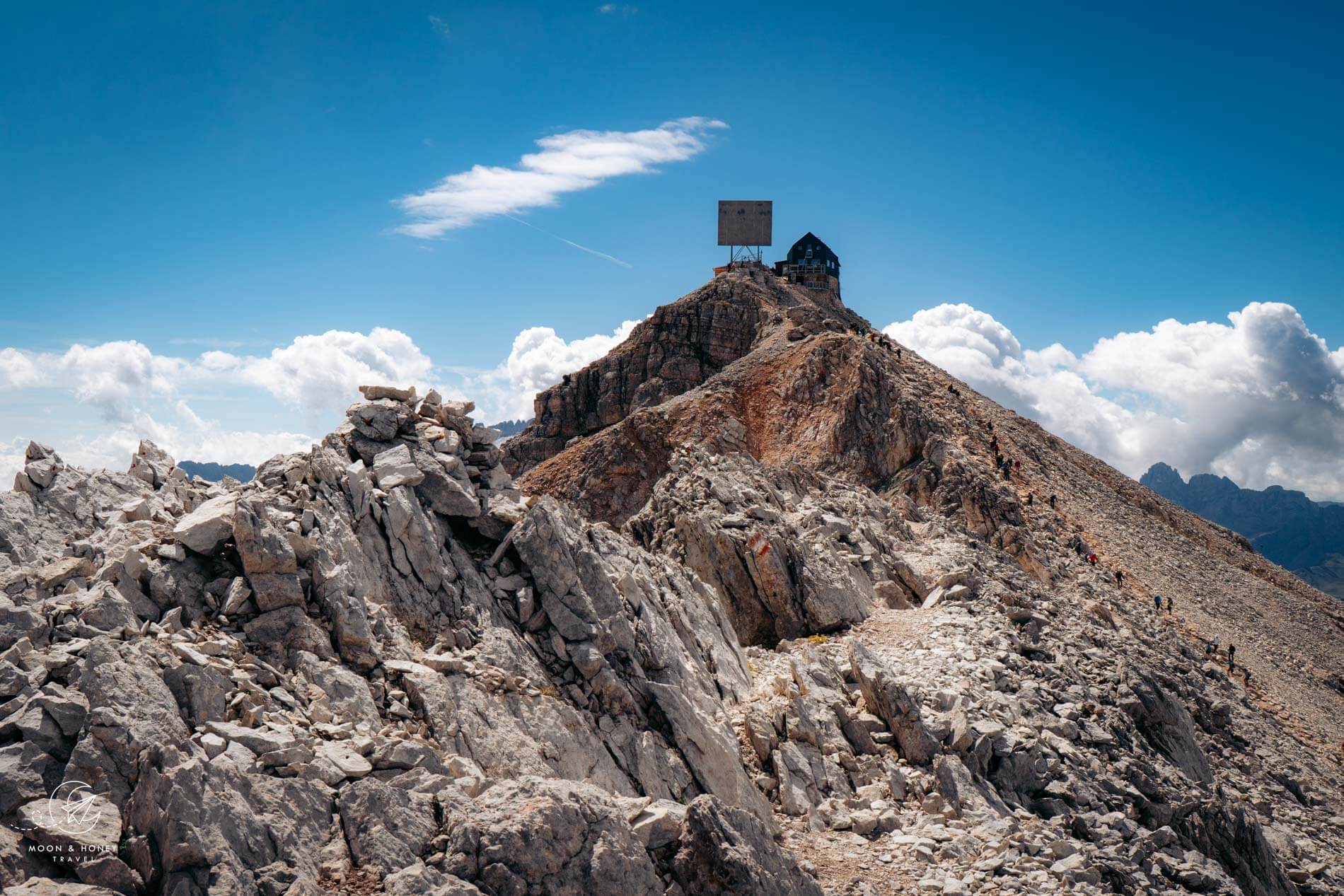
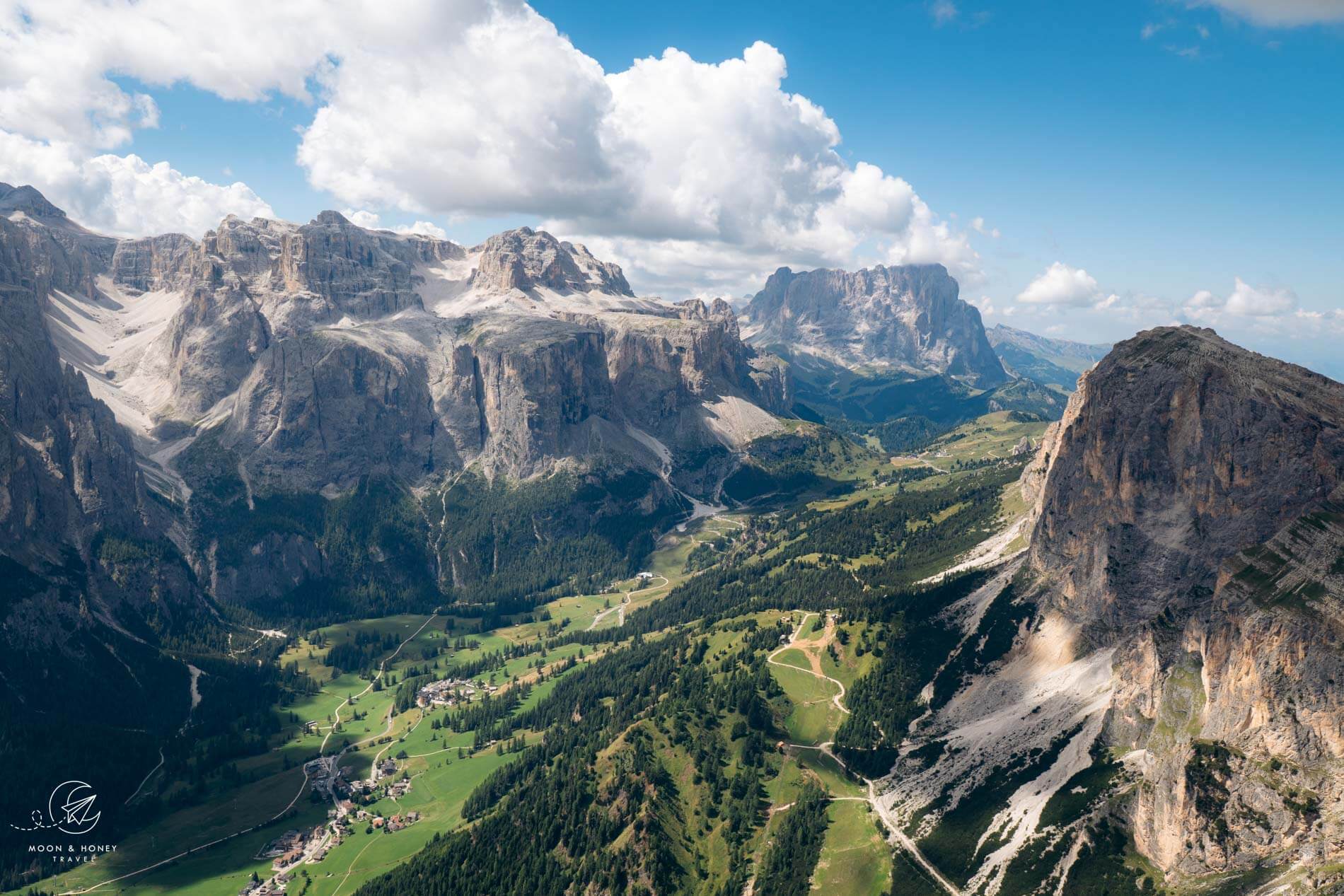
The Dolomites are a massive mountain range in the Italian Alps, stretching across the regions of Trentino-Alto Adige, Veneto, and Friuli Venezia Giulia. In 2009, these mountains were listed as a UNESCO World Heritage Site covering a total area of 141,903 hectares.
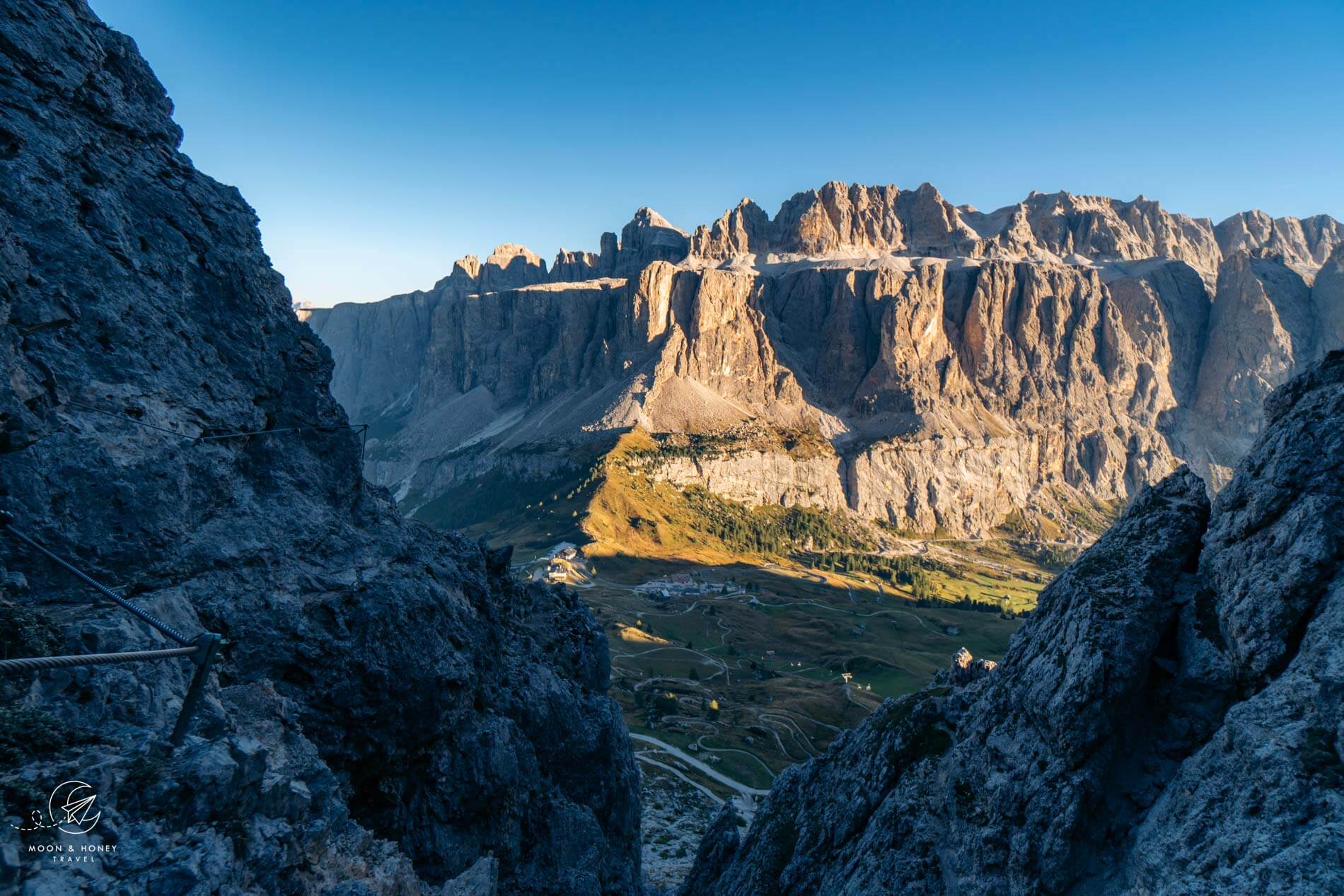
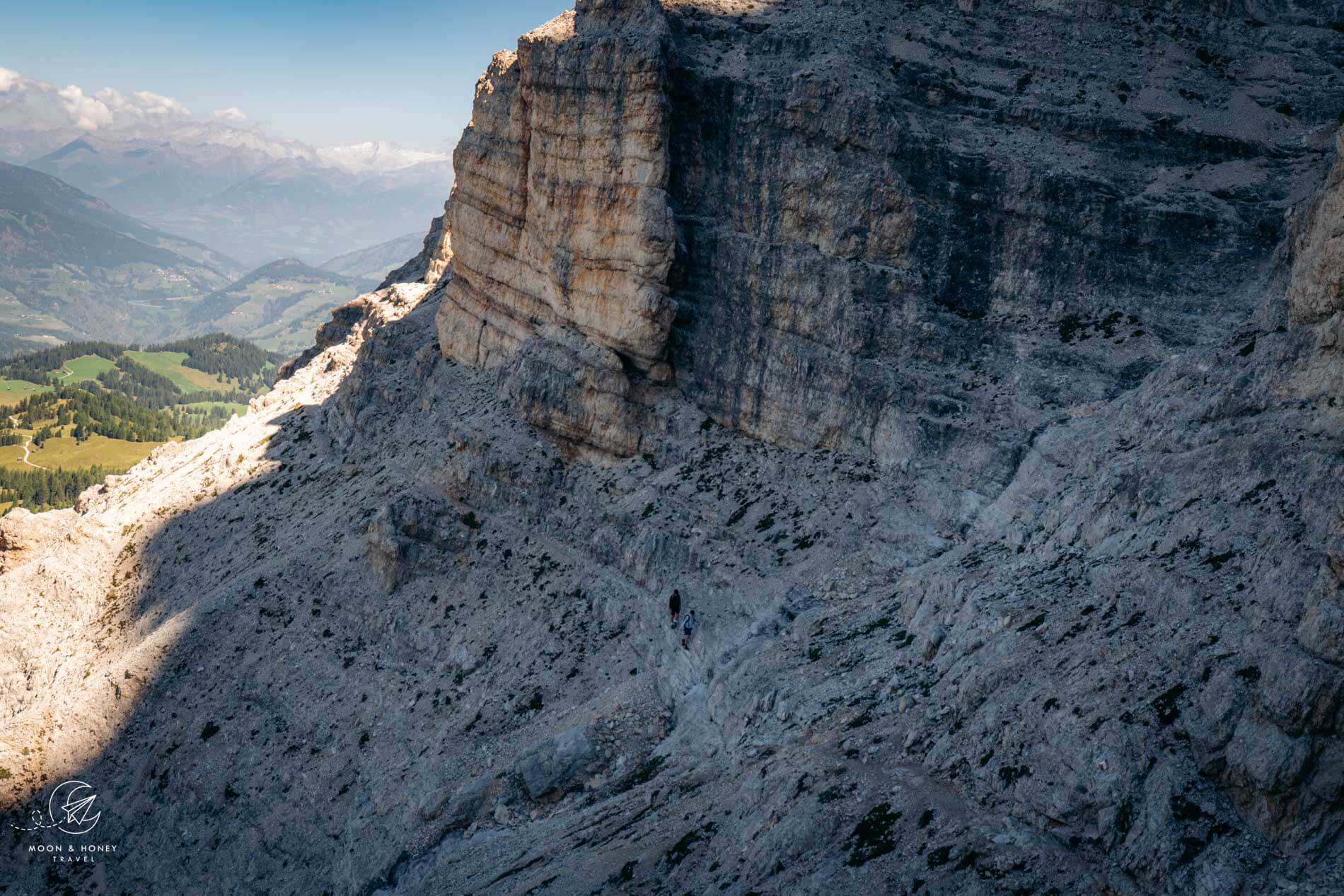
The Italian Dolomites are without a question one of the most dramatic alpine destinations in the world. Whether you’re out driving, cycling, skiing, or hiking, you’ll be captivated by the sheer cliffs, vertical walls, craggy pinnacles, karst plateaus, idyllic valleys, and alpine pastures that define the unique landscape of the Dolomiti.
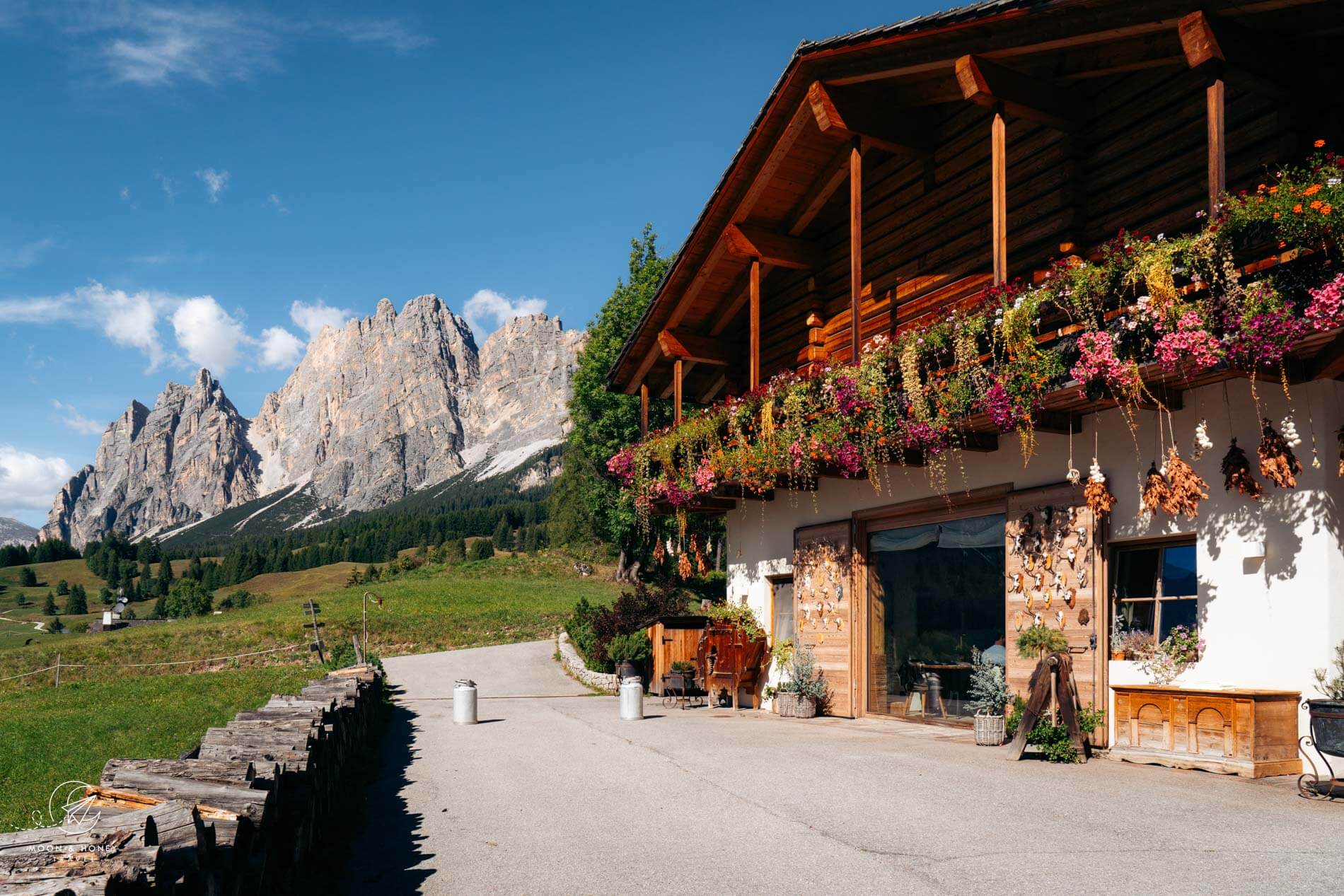
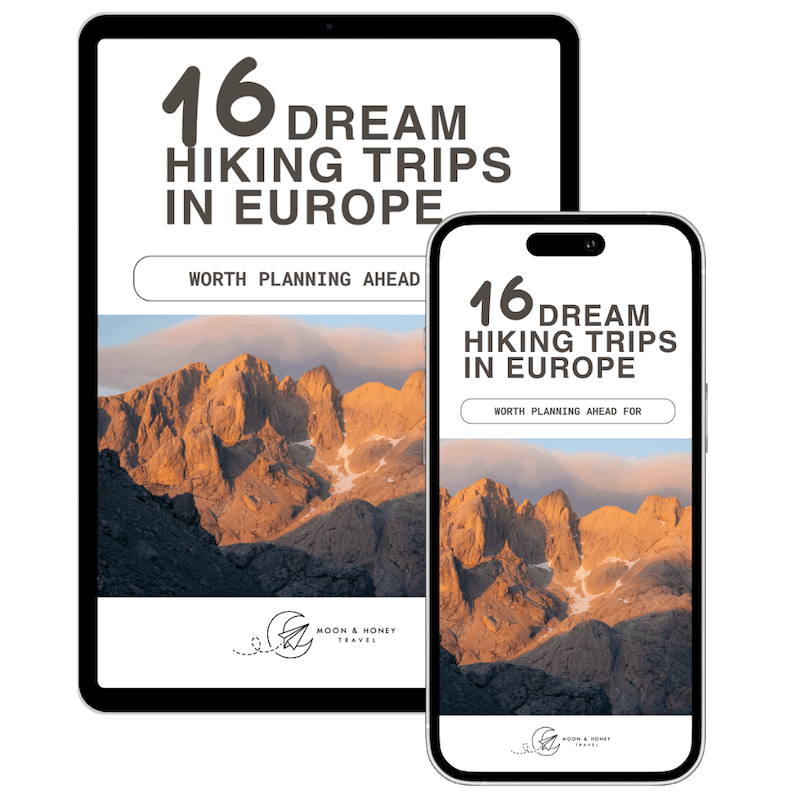
Here, mountain peaks slash the sky and light up in fiery shades of crimson and violet (Enrosadira). Below the soaring pinnacles, cattle graze on undulating alpine pastures, dotted with huts. This dazzling contrast between rocky mountains and silky meadows is what makes the Dolomites so cinematic.
But, what sets the Dolomites truly apart is the outstanding standard of both hospitality and cuisine, especially in South Tyrol.
My Dolomites Travel Guide is based on a decade of hiking and skiing in this region.
PIN THIS

DOLOMITES TRAVEL GUIDE OVERVIEW
DOLOMITES ITINERARY
- 5-Day Dolomites Road Trip
- 7-Day Dolomites Road Trip Itinerary
- 10-14 Day Dolomites Road Trip Itinerary
PLAN YOUR TRIP TO THE DOLOMITES
Where Are the Dolomites
The Dolomites are located in Northern Italy, close to the border of Austria. The various Dolomites mountain groups span across the provinces of South Tyrol, Trentino, Belluno, Udine, and Pordenone.
The range is bounded by Puster Valley in the North, Isarco Valley in the northwest, Piave Valley in the east and southwest, the Brenta Valley in the southwest, and the Adige Valley in the west.
Dolomites Map
The most popular resorts and holiday areas are concentrated in the provinces of South Tyrol, Trentino, and Belluno. On the map below, I’ve plotted all the must-see attractions across the Dolomites including Seceda, Lake Braies and Lake Sorapis. Read Best Places to Visit in the Dolomites for a summary of our favorite destinations.
DESTINATIONS
Val di Fassa
Val d’Ega

What Are the Dolomites
The Dolomites are a mountain range in the Italian Alps, which form part of the greater Southern Limestone Alps (like Slovenia’s Julian Alps and Austria’s Gailtal Alps and Carnic Alps).
The range encompasses many staggering peaks, 18 of which rise over 3000 meters. The highest mountain in the Dolomites is Marmolada (3342 meters).
The rocks of the Dolomites were formed over 230 million years ago, when the whole area was covered in a shallow tropical sea. Over time, deposits of coral and sea creatures progressively built up on the seafloor. About 65 million years ago, climatic tectonic events led to the creation of the alpine chain.
These light-colored Dolomite rocks are composed of the mineral calcium magnesium carbonate as well as true limestone.
Calcium magnesium carbonate was first identified by the French mineralogist Déodat de Dolomieu in the 18th century. In his honor, the mineral and the rock was renamed Dolomite. Thus, the Pale Mountains are now chiefly referred to as the Dolomites.

Best Places to Stay in the Dolomites
The Dolomites stretch across three Italian regions, and choosing where to stay can be overwhelming. Best Places to Stay in the Dolomites will help you navigate the region and find the best base for your trip, including:
- Cortina d’Ampezzo
- Val Gardena: Santa Cristina, Selva, and Ortisei
- Alta Badia: Badia, La Villa, Corvara, San Cassiano, Colfosco, and La Val
- Alta Pusteria: Villabassa, Dobbiaco, Sexten, Braies, and San Candido
- San Martino di Castrozza
- Val di Funes
Dolomites Road Trip Planning
International travelers typically fly into either Venice Marco Polo Airport or Treviso Airport, then rent a car and drive to the Dolomites. Depending on your arrival airport and final destination within the region, the drive can take anywhere from 45 minutes to 5 hours.
If you’re flying into Italy, the most convenient option is usually to rent a car directly at the airport. We recommend using DiscoverCars to compare rates and book a rental vehicle for your trip to Northern Italy.
Closest Airports:
- Bolzano Airport, Italy
- Marco Polo International Airport, Venice, Italy
- Treviso Airport, Treviso, Italy
- Valerio Catullo Airport, Verona, Italy
- Malpensa Airport, Milan, Italy
- Innsbruck Airport, Austria
- Munich International Airport, Germany. My Munich to Dolomites Road Trip guide highlights the best places to visit along the way.
I suggest choosing 2-4 bases and spending 3-5 nights in each base. It’s better to stay in less places for longer periods of time, because many accommodations in the Dolomites have a minimum stay requirement of anywhere from 2 to 7 days. Additionally, there is so much to see and do in each region.
Travelers seeking a slower, deeper experience ought to consider staying in one base.
Dolomites Car-Free Travel
While having a car offers greater flexibility, it’s entirely possible to explore the Dolomites without one. Learn when to visit, where to stay, and how to plan a seamless car-free itinerary in How to Visit the Dolomites without a Car.
There’s no need to constantly change locations in the Dolomites. You can easily base yourself in one destination for a week or more. My Val Gardena Summer Itinerary is designed for travelers who prefer to stay in a single accommodation for seven days and explore from there.
Read How to Get to the Dolomites to find out how to get to the Dolomites by transit from the closest airports, train stations, and bus terminals.

Accommodation
There is a vast range of accommodations in the Dolomites, including farm stays, guesthouses, apartments, aparthotels, B&BS, boutique hotels, spa hotels, and mountain huts.
No matter where you stay, you can expect a high-standard of hygiene and comfort.
The Dolomites boast an unbelievable collection of luxury spa hotels, some of the best in the world. If you’re visiting on your honeymoon or anniversary, during shoulder-season when the weather is unpredictable, or in winter, you won’t regret staying in a wellness hotel like Gardena Grödnerhof Hotel & Spa in Ortisei, Hotel Fanes in San Cassiano, Hotel Granbaita Dolomites in Selva, COMO Alpina Dolomites on Alpe di Siusi, Romantik Hotel Cappella in Colfosco, and Forestis Dolomites near Val di Funes.
Top Hotels
Our favorite boutique hotels, spa hotels, B&Bs, and design hotels in the Dolomites.
1 —– 7
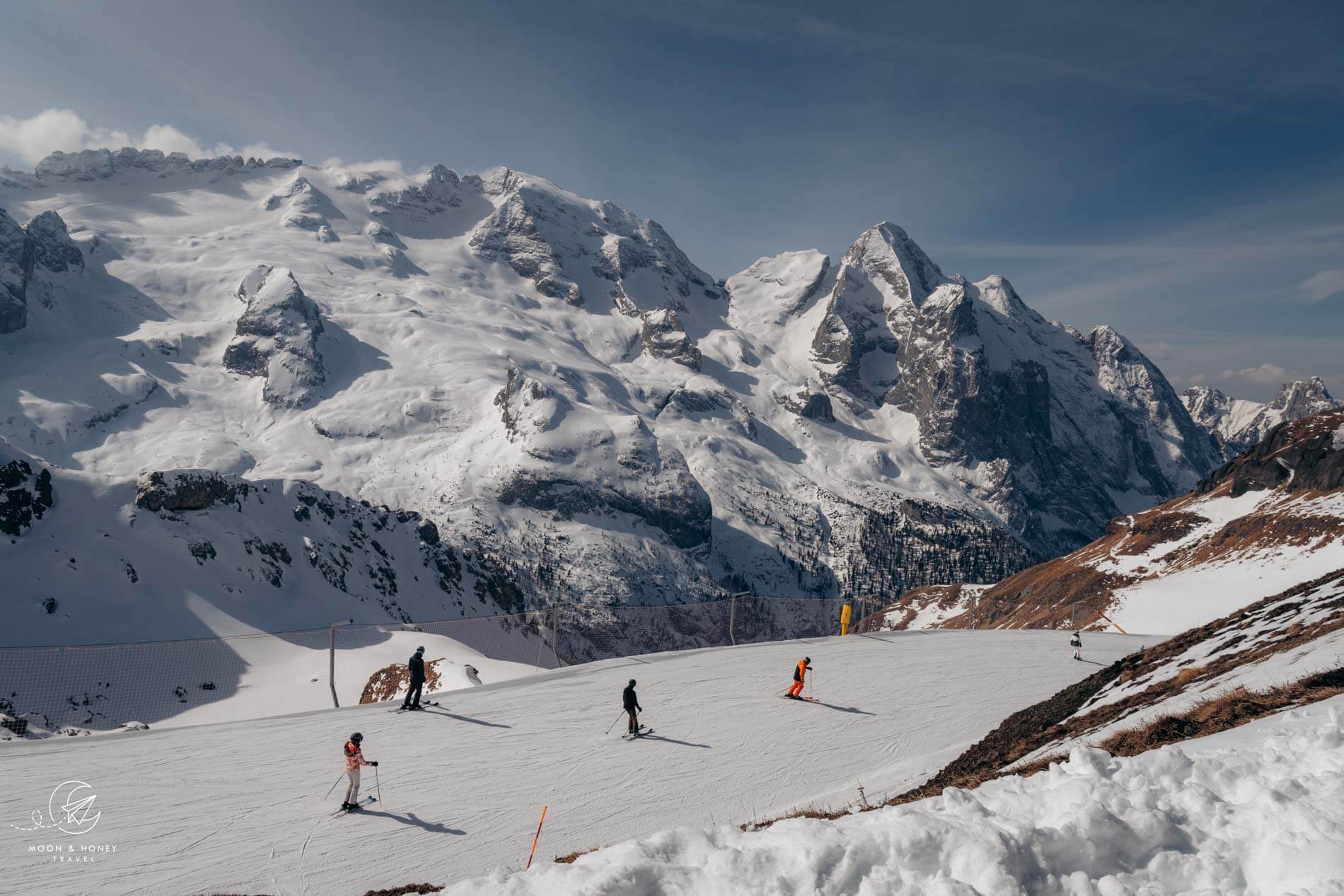
Skiing in the Dolomites
Home to Dolomiti Superski, the world's largest ski network, the Dolomites are one of Europe's top ski destinations, particularly for intermediate skiers. Having personally skied almost all 12 resorts, my recommendation is to select a resort suited to your skill level and visit in early-mid December or March to avoid peak holiday crowds. Read my guide to Skiing in the Dolomites for insider tips, including info on ski-in ski-out hotels, the famous Sellaronda circuit and Hidden Valley Run.
Winter in the Dolomites isn't just for skiers. Non-skiers can explore prepared hiking and snowshoe trails (see my Sexten Winter Hiking Trip), savor meals at mountain huts, enjoy sledding, and partake in advent festivities like Christmas Markets and Krampus Runs.
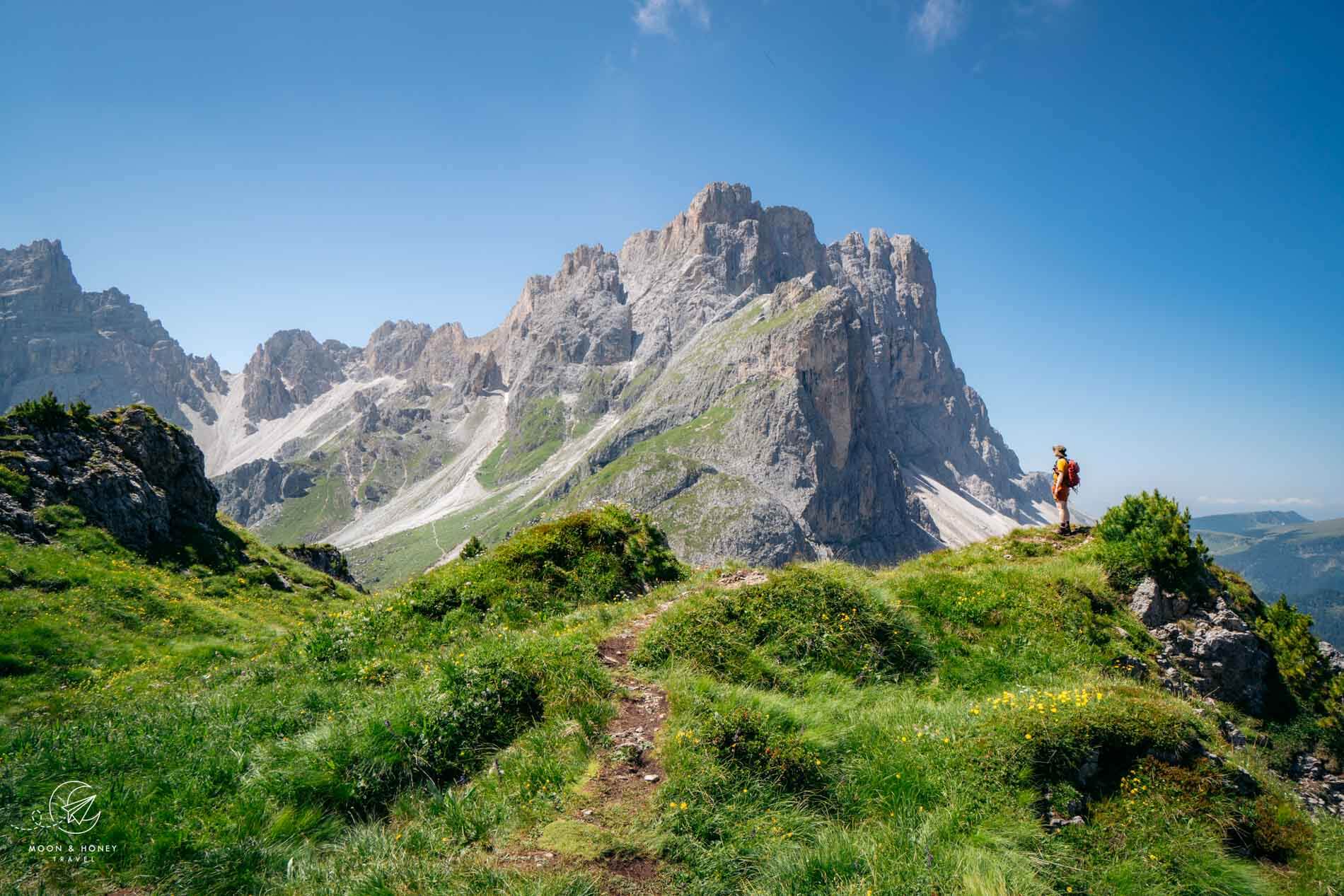
Hiking in the Dolomites
I always say that once you've hiked in the Dolomites, you'll inevitably return for another visit. These mountains are intoxicating and addictive; they get under your skin and leave you longing to hike them again.
I recommend hiking in the Dolomites in mid-late June, September, and October. Here's what it's like to visit in May, August, and November.

Languages
The Dolomites are located in 5 different provinces within 3 regions in Northeastern Italy. One province, South Tyrol (Südtirol in German, Alto Adige in Italian), was part of the Austro-Hungarian Empire prior to World War I.
German continues to be the primary language spoken in this region. When traveling and hiking through South Tyrol, every street, advertisement, natural area, mountain hut, etc… is written in both German and Italian. Generally, South Tyroleans are culturally Tyrolean (Austrian) rather than Italian.
Another language that you may encounter is Ladin, a romance language spoken in the provinces of South Tyrol, Trentino, and Belluno, by the Ladin people.
Around Val Gardena, Val Badia, Val di Fassa, and Ampezzo Valley, you may see signage and names (e.g. towns, mountain huts) in three languages: Ladin, German, and Italian.
While English speakers tend to use Italian names, it's important to be familiar with the German and Ladin names as well.
Here are a few examples:
- Alpe di Siusi (Italian), Seiser Alm (German), and Mont Sëuc (Ladin)
- Ortisei (Italian), St. Ulrich (German), and Urtijëi (Ladin)
- Sassolungo (Italian), Langkofel (German), and Saslonch (Ladin)

What to See and Do in the Dolomites
Below, I've highlighted some of my favorite destinations and things to do in the Dolomites. Explore this topic further in Unforgettable Things to Do in the Dolomites.
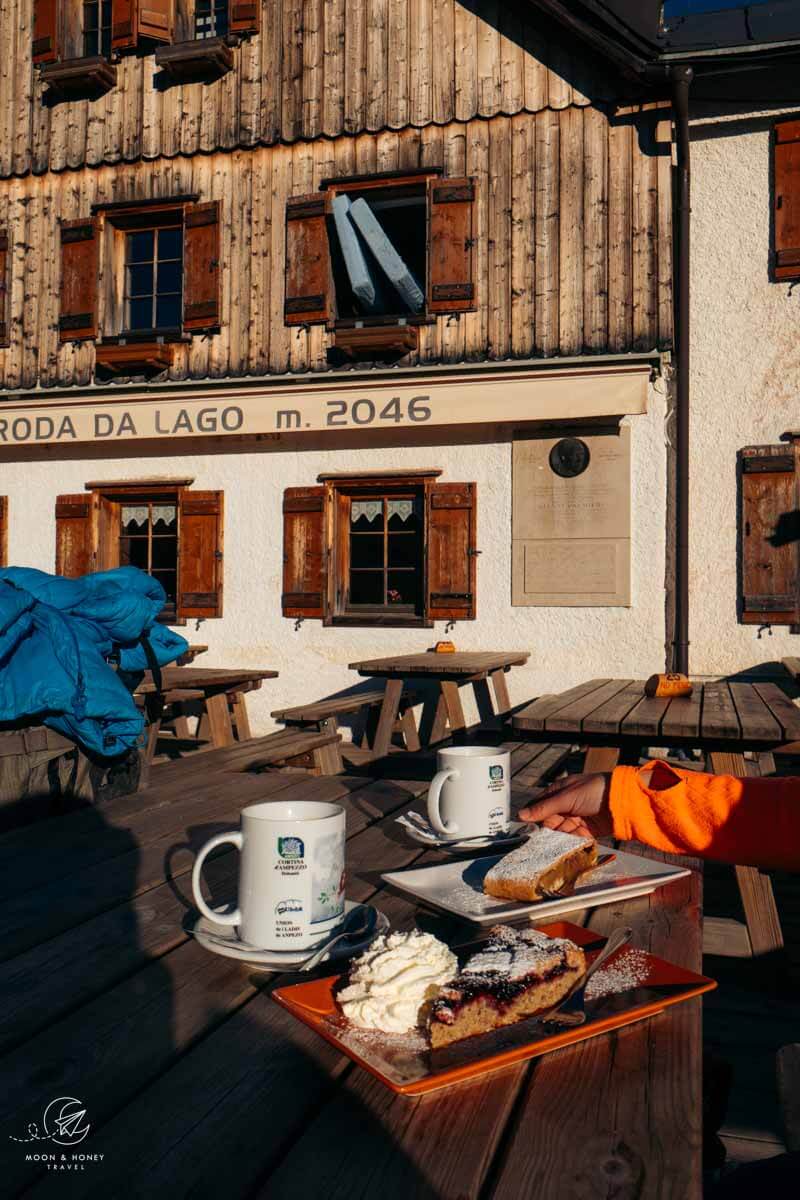
Stay in a Rifugio
Sleeping in a mountain hut, surrounded by breathtaking scenery, is a wonderful experience in and of itself. However, it's also very practical, if you want to break up a longer trek like this 3-Day Rosengarten Trek or the Alta Via 1.
We love the atmosphere of the Dolomites’ rifugi. Guests spend their evenings playing cards, reading books, studying trail maps, and sipping schnapps. Communal dining is another highlight. Sharing a table with fellow hikers creates natural opportunities to swap stories, exchange tips, and connect with people from around the world.
Alta Via 1 hiking guides:
Related: Hut to Hut Hiking in the Dolomites

Climb a Via Ferrata
A via ferrata (“iron way”) is a mountain route that is protected by a series of rungs, pegs, ladders, and cables.
Hikers can securely tackle exposed and vertical passages, by grasping and clipping into cables (using a via ferrata lanyard and climbing harness).
Though a thrilling activity today, via ferrata climbing was borne out of necessity during the First World War. Italian and Austro-Hungarian troops battled against each other in the Dolomites mountains. Permanent lines and ladders were affixed to rock faces to help troops move quickly and safely at high elevations.
Via ferrata routes are graded on a scale from 1 - 6 (easy - challenging), using the Smith/Fletcher dual grading system, or on a scale from A - F (easy to extremely difficult), using the Schall grading scale.
Here are some via ferrata hikes we've done: Gran Cir summit (Grade A), Oskar Schuster (Grade B/C), and Sass Rigais (Grade B/C). Consult this guidebook to find routes.

Hike to Tre Cime di Lavaredo
In the past, I always recommended hiking this 4-hour Tre Cime di Lavaredo loop trail around the Three Peaks, starting at Rifugio Auronzo at the top of the toll road. Unfortunately, this gorgeous trail is now overly crowded due to its social media fame.
A great alternative, suitable for fit and experienced mountain hikers with no fear of heights, is the Torre dei Scarperi hike starting in Val Campo di Dentro.
It's also possible to hike to Tre Cime di Lavaredo from Val Fiscalina/Fischleintal near Sexten.
The first time Kati and I visited the Tree Peaks was along this 3-day Tre Cime di Lavaredo hut-to-hut route.

Discover the Meaning of Wellness in Alta Badia
Nestled between the Puez Mountains, Fanes Group, Sella Group, Mount Sassongher, and the Cir peaks, Alta Badia is one of the best destinations in the Dolomites. This charming region in South Tyrol delights with its idyllic scenery, numerous hiking trails, ski resort, and stellar hotels.
When it comes to wellness and spa hotels, Alta Badia is the reigning empress of the region. These hotels pamper guests with their extensive wellness and sauna facilities, gourmet half-board menus, alpine-chic design, and scenic locations.
Standout hotels include Hotel Kolfuschgerhof in Colfosco, Romantik Hotel Cappella in Colfosco, Hotel Fanes in San Cassiano, and Hotel Badia Hill in Badia (read our Badia Hill hotel review).

Marvel at the Geisler Peaks
The Geisler Peaks in the Puez-Odle Nature Park are one of our favorite mountain groups in the Alps. No matter how many times we see them, we're always amazed by how different they look from each summit, trail, or ski run. Every viewpoint offers a fresh perspective and another reason to stop and take it all in.
Here are the my favorite perspectives:
- Seceda summit in Val Gardena
- Seceda ski slope in Val Gardena
- Monte Pic Peak in Val Gardena
- Col dala Pieres Peak in Val Gardena
- Adolf Munkel Trail in Val di Funes
- Santa Maddalena Panorama Trail in Val di Funes
- Tullen Peak in Val di Funes
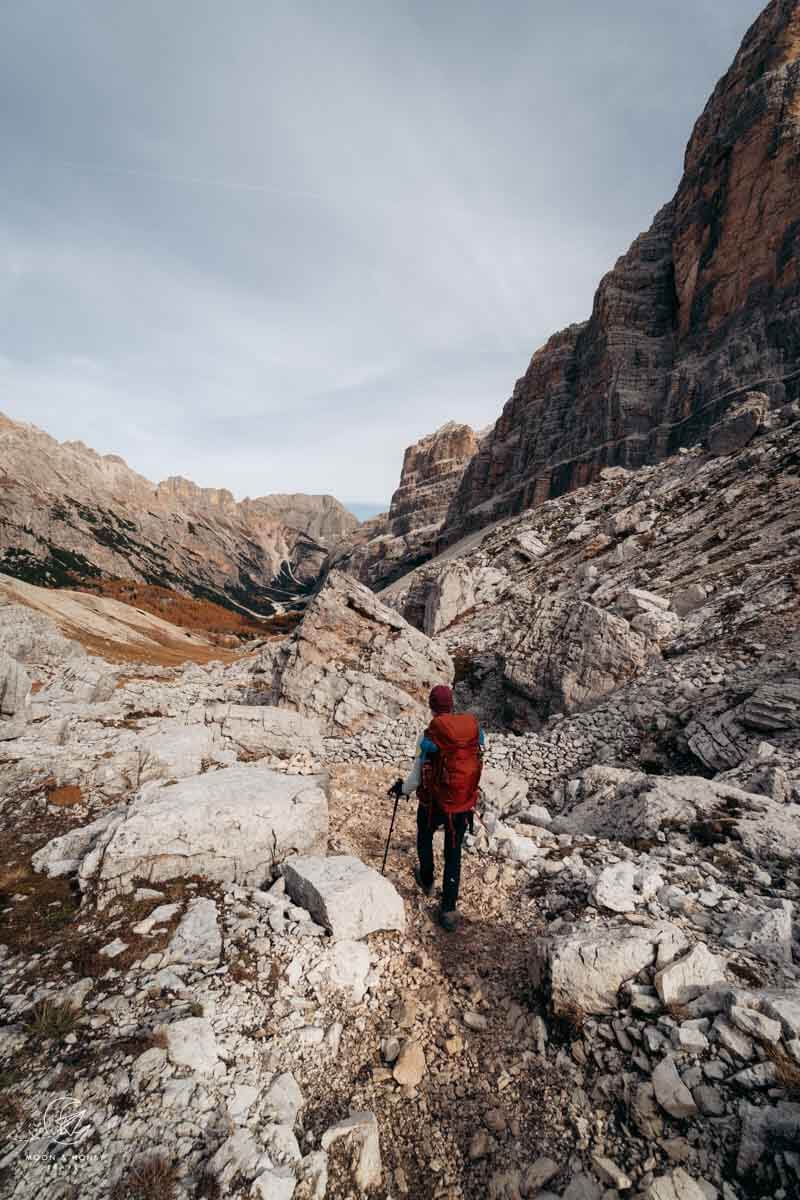
Discover World War I Trails and Tunnels
During World War I, the front between Austria-Hungary and Italy ran through the Dolomites. A bitter mountain war was waged between the opposing sides from 1915 to 1917.
Both armies built tunnels, trails, and trenches to secure the border and protect themselves. The reason why there is such a great network of trails today is due to the efforts of these WWI soldiers.
During the course of the war, the greatest threat to both armies was the extreme weather. In December 1916, avalanches buried 10,000 Italian and Austrian troops in just two days.
Though it’s impossible to imagine how a war could be fought in such unforgiving terrain, there is plenty of evidence pointing to this region’s inglorious past.
To see trenches, tunnels, trails, and other relics from the war, hike to the open-air museum at Cinque Torri, the Lagazuoi Tunnels, Monte Piana, and the Tofana di Rozes Circuit Trail.
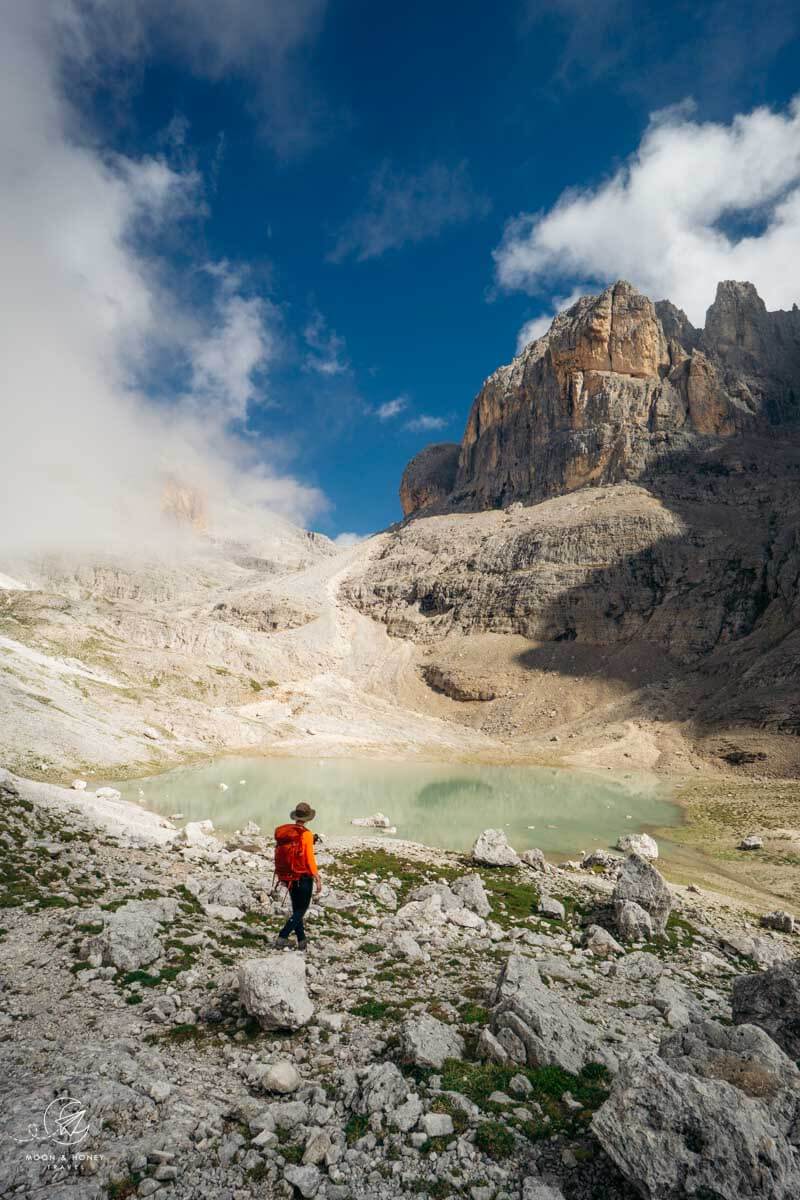
Explore the Pale di San Martino Mountains
The largest and perhaps the most beautiful mountain group in the Dolomites is often always overlooked.
Pale di San Martino, or simply the Pala Group, is located in Trentino and Belluno, between Primiero, Vallde del Biois, and Agordino.
I recommend staying in the resort of San Martino di Castrozza in Trentino. From here, you can venture up to the Altopiano delle Pale di San Martino and circuit Pala di San Martino or even summit Cima della Vezzana.
For the most glorious sunset and alpenglow display, head to Passo Rollo and walk up to Baita Segantini.
Venture to Val Venegia for a lovely walk or a thrilling hike to Rifugio Mulaz.
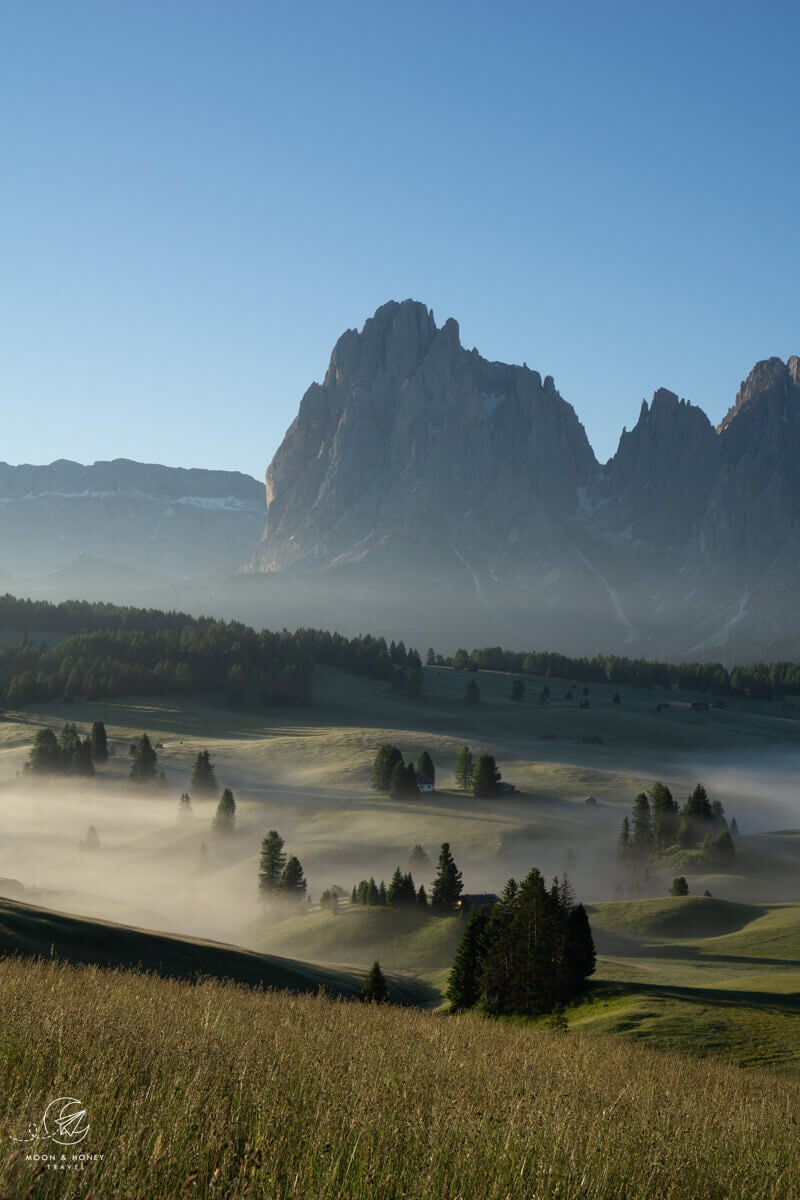
Go on a Culinary Hike across Alpe di Siusi
Alpe di Siusi (Seiser Alm in German, Mont Sëuc in Ladin) is the largest high-alpine pasture in Europe, covering a surface area of 56 square kilometers.
This high-altitude plateau is located in South Tyrol, high above Val Gardena, Castelrotto, and Siusi.
This is a great destination for easy walking coupled with excellent food and wine.
If you follow the Hans and Paula Steger Trail from Compaccio/Compatsch to Saltria, you can detour to the gourmet Gostner Schwaige and Rauchhütte alpine pasture huts.
Ambitious hikers can tackle the Rifugio Bolzano to Rifugio Alpe di Tires circuit hike starting in Compaccio. The Tierser Alpl refuge is one of the very best places to eat South Tyrolean cuisine.
Best Alpe di Siusi hike: Alpe di Siusi Meadows Circuit Trail
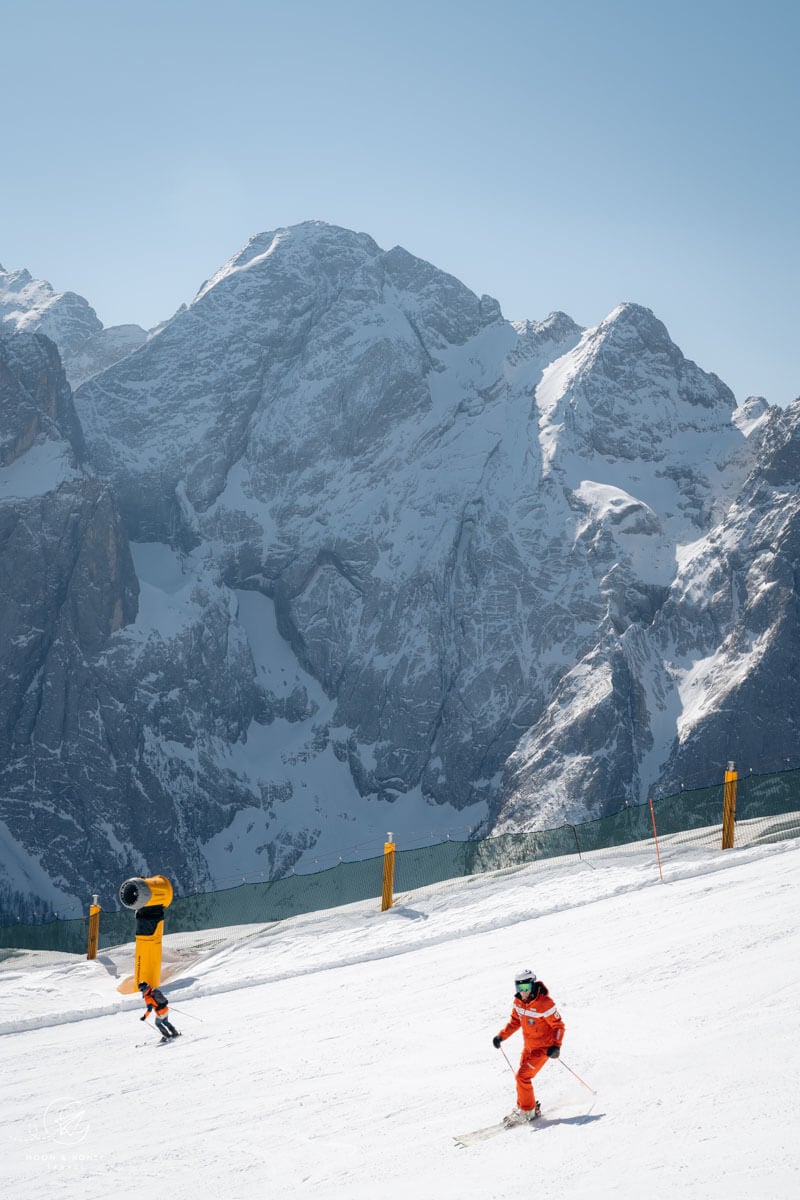
Drive or Ski across the Dolomites Mountain Passes
As you travel between valleys in the Dolomites, you'll cross a series of scenic mountain passes. More than just transit routes, these passes are destinations in their own right, often featuring cable car stations, restaurants, mountain huts, and trailheads.
In winter, you can ski across four mountain passes along the Sella Ronda ski circuit.
From Passo delle Erbe, hike the circuit trail around Sass de Putia.
From Passo Gardena, hike to Gran Cir, Sass da Ciampac, or Cima Pisciadu.
From Passo Giau, hike to the Mondeval plateau, Lago delle Baste, and even Lago Federa.
From Passo Sella, embark on the circuit trail around Sassolungo or climb the Via Ferrata Oskar Schuster.
From Passo Pordoi, hike the Viel del Pan and Alta Via Della Cresta trail.

Dolomites Travel Blogs
-

Gran Festa del Desmontegar in Primiero Valley, Dolomites
-
3 Best Restaurants in Cortina d’Ampezzo
-
Via Ferrata Piccolo Cir (Grade B/C), Dolomites
-
Via Ferrata Sass dla Crusc (Heiligkreuzkofel), Alta Badia, Dolomites
-
Lichtenfelser Steig: Secret Hike to Piz Boè, Dolomites
-
Sassongher Peak Hike, Alta Badia, Dolomites